Get Your Community the Yes It Deserves
Civic Voice Academy walks neighborhood groups, nonprofits, and local advocates through a clear, step-by-step roadmap. You'll learn how to find the right city hall contact and deliver a presentation that actually moves the room.

"Local government isn't a wall — it's a door, and I'm going to show you exactly how to open it."
— Jennifer Schoeneck
What you'll learn
What you'll be able to do
- Identify the right local government contacts — city staff, council members, or advisory boards — for your specific goal and know exactly when to approach each one.
- Craft clear, compelling written communications (emails, letters, and memos) that get read and taken seriously by local government staff.
- Understand how local policy is made, how programs get funded, and how public improvement projects move from idea to approval.
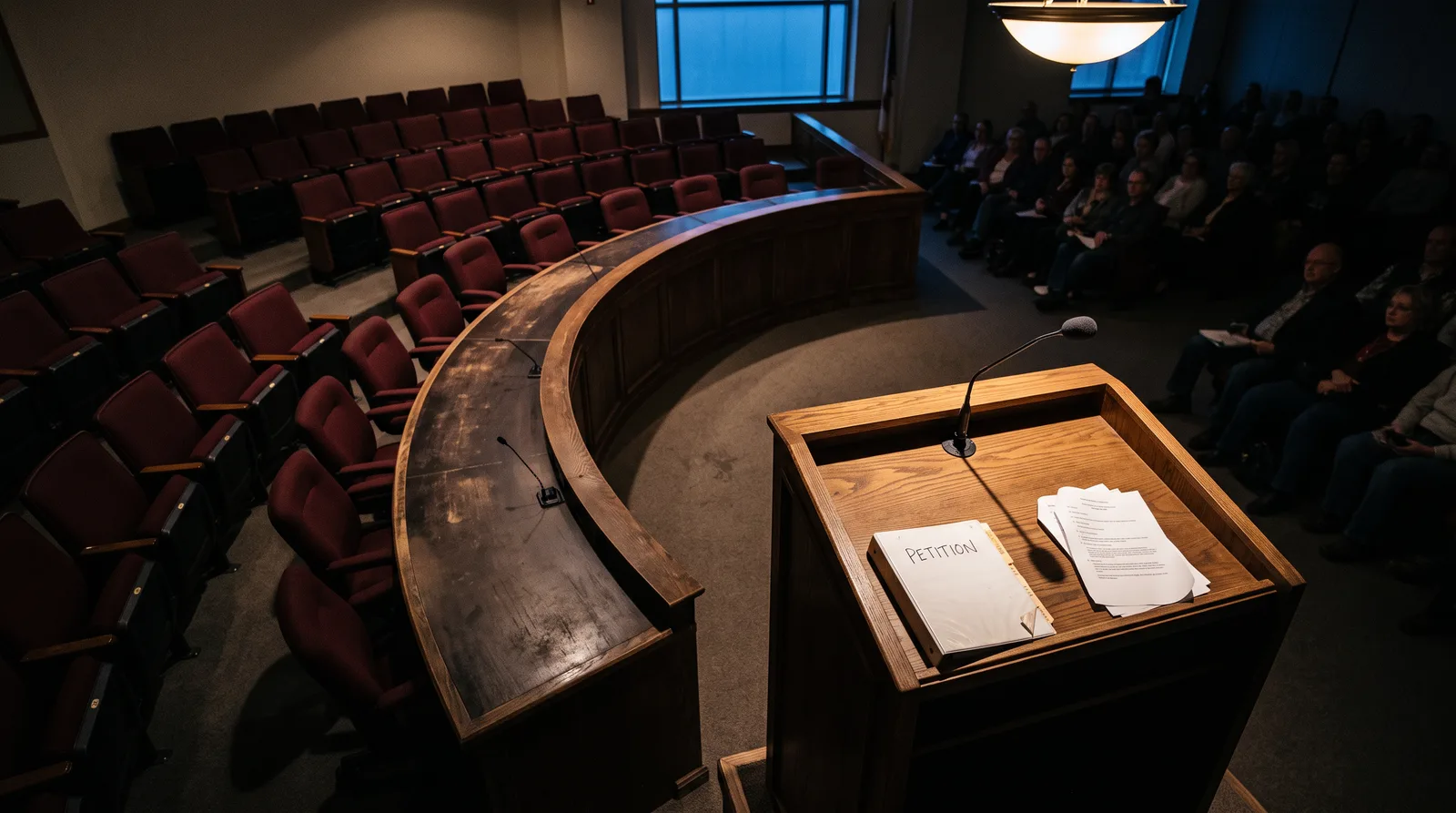
- Prepare and deliver a confident, persuasive public comment or formal presentation at a city council or advisory board meeting.
- Map out a strategic timeline for your initiative, knowing which meetings, budget cycles, and public comment windows to target.
- Build lasting, respectful relationships with local government stakeholders so your community group becomes a trusted voice at the table.
How it works
A school that adapts to you
This isn't a set of static videos. Every lesson is generated live and tuned to where you actually are.
We learn your level
A quick placement check tailors your starting point so you're never bored or lost.
Lessons adapt as you go
Each lesson is written for your pace and your goal, adjusting as your skills grow.
Your AI coach keeps you moving
Checkpoints, feedback, and gentle nudges turn progress into a real result.
The curriculum
What's inside your school
6 modules · 25 lessons

How Local Government Actually Works
Gives students a clear map of local government structure — who does what, how decisions get made, and where community groups fit in.
- 1.1The Landscape of Local GovernmentIncluded
- 1.2The Three Doors: Staff, Council, and Advisory BoardsIncluded
- 1.3How a Policy, Program, or Project Becomes RealIncluded
- 1.4Budget Cycles and Public Windows You Can't MissIncluded
Finding Your Right Contact — and the Right Moment
Teaches students to match their specific goal to the correct government contact and approach them at the most strategic time.
- 2.1Matching Your Goal to the Right DoorIncluded
- 2.2Researching Who Holds the Power for Your IssueIncluded
- 2.3Timing Is Strategy: When to Reach Out and WhyIncluded
- 2.4Building Your Contact MapIncluded
Communicating Effectively with City Staff
Builds the skills to write and speak with local government staff in ways that get your request read, respected, and acted on.
- 3.1What City Staff Need from YouIncluded
- 3.2Writing Emails and Letters That Get ResultsIncluded
- 3.3The One-Page Brief: Your Most Powerful ToolIncluded
- 3.4Following Up Without Burning BridgesIncluded
Engaging Council Members and Advisory Boards
Prepares students to approach elected officials and advisory bodies at the right time, in the right way, with the right message.
- 4.1How Advisory Boards Influence DecisionsIncluded
- 4.2Meeting with Your Council Member: What to ExpectIncluded
- 4.3Communicating Your Ask to Elected OfficialsIncluded
- 4.4Building Allies Across the DaisIncluded
Presenting at a City Council or Advisory Board Meeting
Gives students everything they need to walk into a public meeting prepared, confident, and persuasive.
- 5.1Anatomy of a Public MeetingIncluded
- 5.2Crafting Your Public CommentIncluded
- 5.3Delivering Your Comment with ConfidenceIncluded
- 5.4Formal Presentations: Going Beyond Public CommentIncluded
- 5.5Handling Questions and Unexpected MomentsIncluded
Building a Strategic Plan and Lasting Relationships
Brings everything together into a concrete action plan and a long-term relationship strategy that makes your group a trusted community voice.
- 6.1Mapping Your Initiative's TimelineIncluded
- 6.2Rallying Your Community: Turnout and Coalition BuildingIncluded
- 6.3Staying in the Room: Maintaining Relationships After the VoteIncluded
- 6.4From Win to What's Next: Sustaining Your Civic VoiceIncluded
Who it's for
Is this you?
Neighborhood Association Leaders
She's been running the neighborhood association for years and wants to finally turn community concerns into real city action.

Nonprofit Program Directors
He needs to get a new community program into the city budget and has to learn how to navigate the funding process from the inside.

First-Time Civic Advocates
She cares deeply about her community and is ready to show up at city hall — she just needs to know where to start and who to talk to.

HOA Board Members
He's fielding requests from residents about public infrastructure and needs to understand how to move those issues through the right government channels.

Youth & Community Organizers
He's built real grassroots energy around a local cause and now needs the civic strategy to turn that momentum into policy or funding.

PTA & School Advocates
She's been fighting for safer streets and better school-area programs and is ready to take that fight to the city council floor — prepared and confident.
Questions
Frequently asked
Your teacher
A note from your teacher
Jennifer Schoeneck
I know where you're standing right now.
You've got a real issue — something affecting real people in your neighborhood — and you've probably already tried a few things. Maybe you sent an email that never got a reply. Maybe you showed up to a city council meeting, signed up to speak, and then sat there for three hours before getting two minutes at the microphone, unsure if anything you said landed. Maybe you're not even sure you've been talking to the right people. And somewhere in the back of your mind is that quiet, discouraging thought: maybe this is just how it works, and groups like ours don't really get heard.
I want to tell you, clearly and with full conviction: that's not true. Local government is far more accessible than most people realize — but it does have a logic to it, and if nobody's ever shown you that logic, the whole thing can feel like a maze with no map. That's what I've spent years navigating, and it's exactly what I built Civic Voice Academy to hand you.
This course is the insider's guide I wish every community group had from day one. Not the theoretical version — the practical one. The one that tells you why emailing your council member about a staff-level issue can actually slow things down. Why showing up at the right public comment window matters more than showing up loudly. Why a well-crafted one-page brief often does more work than a passionate speech. And how the relationships you build along the way — with staff, with board members, with allies across the dais — become your most durable civic asset.
What I care about most is that you leave this course not just with information, but with confidence. Confidence that you know who to talk to and when. Confidence that your written communications will be taken seriously. Confidence that when you walk into that council chamber, you're prepared — not just hopeful. That confidence isn't about being bold or loud. It's about being ready.
Your community has a voice. Civic Voice Academy is here to make sure it gets heard — and keeps being heard, long after your first win. I'm genuinely glad you're here, and I can't wait to see what your group does with this.
— Jennifer Schoeneck
Start your journey today
Get instant access — learn at your own pace with an AI coach in your corner.
$24.99/mo
Recurring billing · cancel anytime
Secure checkout · Instant access
- 6 modules, 25 lessons
- AI-adaptive lessons tuned to your level
- Quizzes & checkpoints to lock in progress
- Your own AI learning coach
- Learn on any device, at your pace
- Full access for as long as you're subscribed